Cat Mahjong Solitaire: Layout Strategy Guide
The Cat is a medium layout in Mahjong Solitaire. It arranges all 144 tiles into the shape of a sitting cat, with two ears, a rounded body, and a curling tail. This guide covers how the board is built, which tiles to clear first, and how to read its four-layer body so you finish more games.
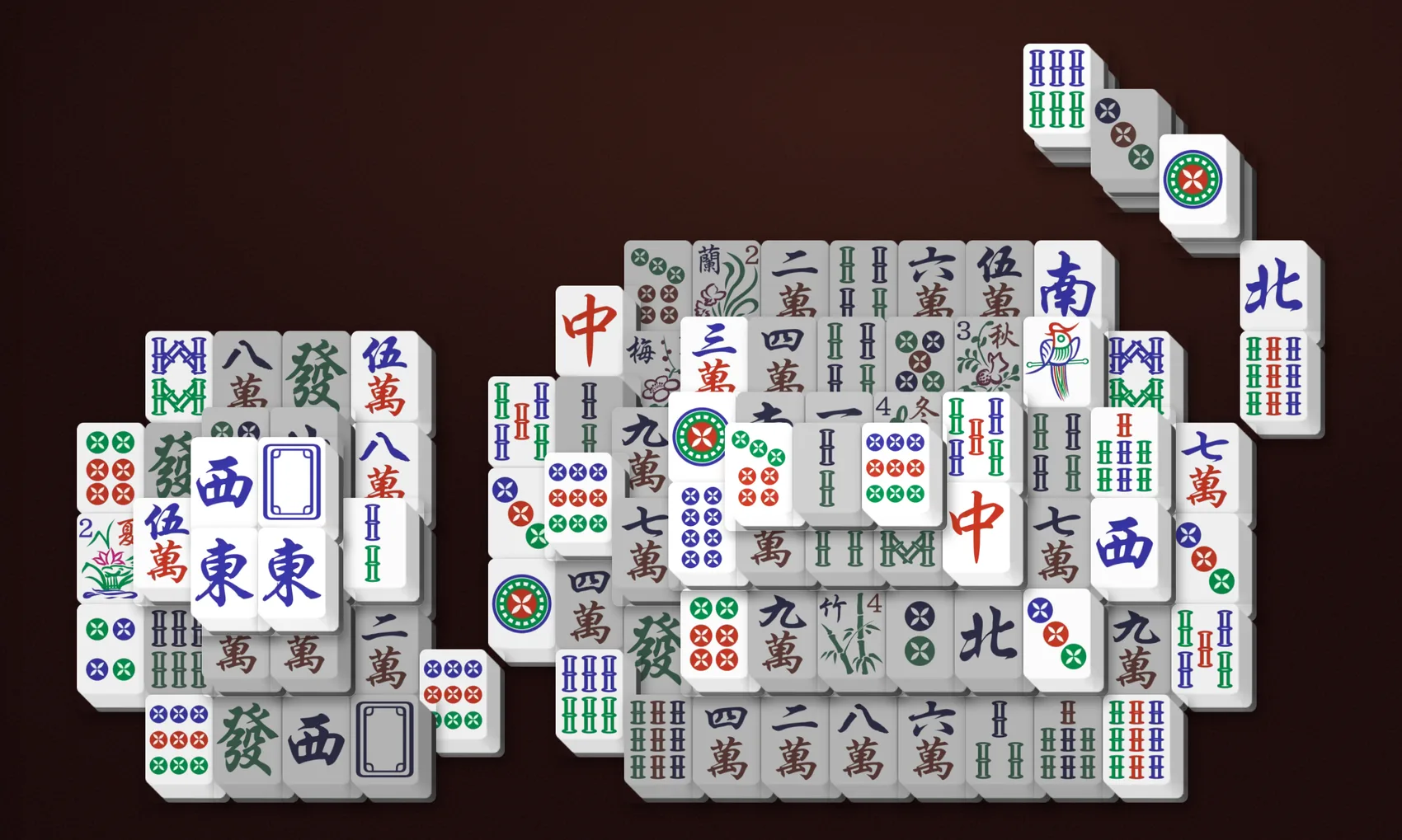
Table of Contents
What Is the Cat Layout?
The Cat is a medium layout in Mahjong Solitaire. It uses all 144 tiles, the same collection every layout uses. The tiles form the outline of a cat sitting and seen from above: a head with two pointed ears, a broad body, and a tail that curls out to one side. It is one of several animal-shaped boards on this site.
Your objective never changes between layouts. You remove tiles in matching pairs. A tile is free when nothing rests on top of it and at least one side — left or right — is open. Match two free tiles of the same design, and both leave the board. Clear all 144 tiles and you win.
What sets the Cat apart is balance. The ears and the tail stick out from the body, so they hand you free tiles from the very first move. The body, meanwhile, stacks up to four layers deep and holds the tiles that decide the game. That mix of an open start and a packed middle is why the Cat suits players who have cleared the wider beginner layouts and want a step up without the jump to a hard board.
How Is the Cat Built?
Picture a cat sitting and viewed from straight above. The ears are two small peaks at the top. The body is the wide mass in the middle, where the tiles pile highest. The tail trails off from one side in a thin, curving line. The ears and tail are thin and exposed; the body is thick and deep.
Four parts of the board behave in different ways. Knowing them tells you where the easy tiles are and where the real puzzle sits.
| Part of the board | Where it is | Why it matters |
|---|---|---|
| Ears | The two peaks at the top of the head | Exposed end tiles that are free on the first move |
| Tail | The thin line curling out from one side | Also free at the tip; clear it in step with the ears |
| Body | The wide mass in the middle of the shape | Stacks up to four layers; holds the buried tiles |
| Paws and base | The lower edge where the cat sits | Open along the front, so a steady source of matches |
The body is where games are won or lost. Because it is wide and four layers deep, the tiles in the center stay covered until you peel back the ones above and beside them. The ears, the tail, and the base feed you easy matches, but they do not open the body on their own. Plan your middle game around the body, and treat the extremities as the supply that keeps you moving while you work toward it.
How Do You Start a Cat Game?
Open with the tiles you cannot lose access to. The ear tips and the tail tip are free on the very first move. They sit at the ends of the shape, so nothing rests on them and nothing can block them. They wait for you no matter what else you do. Treat them as your safe starting points.
Work the extremities in step with each other. If you strip the tail all the way down while the ears sit full, the shape empties on one side and the body locks behind the fuller side. Trade matches between the ears, the tail, and the open base so the cat shrinks evenly. That keeps more tiles in play as you move inward.
Then read the whole board before you dig into the body. The Cat shows you more free tiles at the start than a narrow layout, so it is tempting to match fast. Slow down. Note which designs you can see as pairs, and which appear only once on the surface. A match you make now may seal a tile you need later. A careful first minute saves many lost games.
Why Is the Cat a Medium Layout?
The Cat rates as medium for two reasons that pull against each other. The first makes it easier: the ears and the tail are exposed, so you start with several free tiles instead of one or two. You rarely run out of legal moves in the opening, and that alone lifts a layout out of the hard band.
The second reason keeps it from being easy: the body packs tiles four layers deep. A wide, deep middle hides a lot of tiles, and the only way to reach them is to clear the layers above in the right order. If you spend your early matches stripping the edges and ignore the body, you can arrive at a board where every remaining tile is locked inside the center.
So the Cat does not trap you the way a narrow layout does, where a single pinched tile ends the game. It tests your pacing instead. The danger is using up the easy edge tiles too soon and leaving the deep body with no support around it. Manage that, and the Cat is a fair, winnable board. The next section shows how.
Cat Strategy: How Do You Keep the Board Open?
A board stays winnable when you keep matches flowing on every side and open the body in order. The Cat rewards patience over speed. These habits keep the board open and lower your odds of a locked center.
- Spread your matches. Take from the ears, the tail, and the base in turn rather than clearing one part to the end. An even shape keeps more tiles free as you go.
- Do not strip the edges bare. The exposed tiles are tempting, but they also brace the body. Leave enough around the middle to keep opening the tiles underneath.
- Open the body in order. The center forms short chains, so clear the tile that frees the next one. Avoid matches that take two open tiles and free nothing new.
- Watch the four of a kind. Every design appears four times. When three copies are free and the fourth sits deep in the body, pair two and hold the third to match the buried copy later.
- Use unlimited undo. On this site, undo has no limit. Try a line into the body, and if it heads for a locked center, step back and pick a safer path. This is the fastest way to learn the Cat.
For tips that apply to every board, not just the Cat, see the Mahjong strategy guide. To brush up on what each tile means, read the Mahjong tiles guide.
How Does the Cat Compare to Other Layouts?
The Cat sits in the middle of the range. This table places it next to three animal layouts players often try alongside it.
| Layout | Difficulty | Layers | Best for |
|---|---|---|---|
| Cat | Medium | 4 | Intermediate players |
| Turtle | Medium | 5 | All skill levels |
| Crab | Medium | 3 | Intermediate players |
| Dragon | Hard | 5 | Advanced players |
The Cat and the Turtle both play as fair medium boards, but the Turtle stacks five layers in a wide shell while the Cat runs one layer shallower with exposed ears and a tail. The Crab spreads wider and only three layers deep, so its tiles are easier to reach. The Dragon is the step up: five layers in a narrow snake, where tiles get pinched and games end fast. If the Cat starts to feel routine, the Mahjong layouts guide covers all 35 shapes and what each one asks of you.
The Cat Shape in Mahjong
The Cat is not one of the old, traditional Mahjong boards. It comes from KMahjongg, the open-source Mahjong Solitaire game, where players have long designed and shared their own tile maps. The Cat is the work of layout designer Alexey Charkov, who built a whole set of animal shapes for the game, including the Dragon, the Spider, and the Crab.
That origin is part of the appeal. A traditional board like the Turtle is a plain, practical mound. The Cat instead turns the same 144 tiles into a picture you can recognize at a glance. The two ears and the curling tail read as a cat the moment the board deals. The shape is a small piece of art as much as a puzzle, and it shows how flexible the Mahjong Solitaire format can be.
Frequently Asked Questions
Is the Cat layout hard?
The Cat rates as medium. It stacks tiles four layers deep, one less than the Turtle or Dragon. Its ears and tail stick out from the body, so several tiles are free on the first move. The real test is the body: clear the edges too fast and you can bury a tile you still need.
How many tiles are in Cat Mahjong?
The Cat uses 144 tiles, the full Mahjong Solitaire set. That includes three suits — circles, bamboo, and characters — plus winds, dragons, flowers, and seasons. Every layout on this site uses the same 144 tiles. The Cat shapes them into a sitting cat with two ears and a curling tail.
What is the best way to start the Cat?
Start with the ears and the tail. Those tiles sit at the ends of the shape, so nothing rests on them and nothing can block them. They are free on the first move and stay free until you take them. Clear them in step with each other, then work the head and the body edges.
Can every Cat game be won?
Not every deal is winnable, but most well-shuffled boards can be solved with care. The open ears and tail give the Cat a friendlier start than a narrow layout. Boards usually lock when the body gets buried, not at the edges. Unlimited undo lets you step back and try a safer line.
Play the Cat Layout
Start a free Cat board in your browser — no download, no sign-up.
Play Cat Mahjong Free